In the ever-evolving landscape of fashion, few topics have sparked as much debate and gradual transformation as the concept of men wearing skirts. What was once a fringe or even taboo subject has slowly but steadily entered mainstream discourse, reflecting broader shifts in societal attitudes toward gender, self-expression, and sartorial freedom.
The journey of men's skirts from controversy to acceptance is not a new phenomenon but rather a resurgence of historical norms. Throughout history, garments resembling skirts—such as the Roman toga, the Scottish kilt, or the traditional attire of many cultures—were commonplace for men. However, with the rigid gender binaries imposed by Western fashion in the 19th and 20th centuries, trousers became the unequivocal standard for men, while skirts were relegated to the domain of women's wear. This division created a powerful stigma around men who dared to cross this sartorial boundary, often labeling them as deviant or challenging societal norms.
In recent decades, the conversation around men's skirts has been reignited, driven by a confluence of cultural, social, and fashion industry forces. The rise of gender-fluid and non-binary identities has played a pivotal role in dismantling traditional fashion rules. Public figures and celebrities have also contributed to normalizing the sight of men in skirts. From rock stars like David Bowie and Kurt Cobain to contemporary icons such as Harry Styles and Billy Porter, high-profile individuals have used their platforms to challenge gendered dress codes, making skirts on men a statement of artistry, rebellion, and identity.
The fashion industry itself has been both a reflector and an accelerator of this change. Designers have increasingly embraced androgyny in their collections, with major houses like Gucci, Louis Vuitton, and Rick Owens featuring skirts in their men's lines. These designs range from utilitarian kilts to flowing, avant-garde pieces, signaling that men's skirts are not a monolith but a diverse category with room for experimentation. Runway shows and fashion weeks have become key arenas for this dialogue, showcasing skirts as a viable and stylish option for men, thereby influencing public perception and retail offerings.
Media coverage and social media have further amplified this shift, creating a vibrant and often polarized court of public opinion. Articles, think pieces, and viral posts dissect every celebrity appearance or fashion show that features men in skirts, generating both support and backlash. This constant discourse has, paradoxically, helped normalize the idea by making it a recurring topic of conversation. Platforms like Instagram and TikTok have given rise to influencers and everyday individuals who proudly share their skirt-clad outfits, building communities and challenging stereotypes one post at a time.
Despite this progress, the court of public opinion remains divided. Critics often argue that men wearing skirts undermines traditional masculinity or confuses gender roles. Some dismiss it as a fleeting trend or a publicity stunt rather than a genuine shift in fashion. These perspectives are often rooted in deep-seated cultural and sometimes political beliefs about gender and propriety. However, even within these criticisms, there is a growing acknowledgment that fashion is a personal choice, and the policing of clothing based on gender is increasingly viewed as outdated.
On the other hand, proponents of men's skirts advocate for sartorial freedom, emphasizing that clothing should not be constrained by gender. They argue that skirts offer practical benefits, such as comfort, especially in warm weather, and aesthetic versatility. Moreover, many see it as a form of protest against restrictive gender norms, promoting a more inclusive and expressive society. This viewpoint has gained traction, particularly among younger generations who are more likely to reject binary thinking in favor of individuality and self-expression.
The retail landscape has begun to respond to these changing attitudes. While still niche, several brands now specialize in or include skirts in their men's collections. Companies like Utilikilt, which markets rugged, functional skirts for men, or more fashion-forward labels, are finding their audience. Department stores and online retailers are also slowly expanding their offerings, though availability often depends on geographic and cultural context. In more progressive urban areas, seeing men in skirts is becoming less of an anomaly, whereas in conservative regions, it may still attract stares or disapproval.
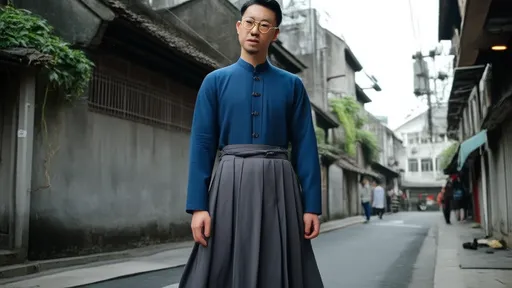
Internationally, the acceptance of men's skirts varies widely. In countries like Scotland, the kilt is a celebrated symbol of heritage and masculinity. In parts of Asia and Africa, traditional garments that resemble skirts are still worn by men without controversy. However, in many Western societies, the adoption of skirts by men is often seen through a lens of modernity and progressiveness rather than tradition. This global patchwork of attitudes highlights that the issue is not just about fashion but about cultural values and historical context.
Looking ahead, the trajectory for men's skirts appears to be one of gradual normalization rather than explosive trendiness. As conversations around gender continue to evolve and as fashion becomes increasingly democratized through digital media, the lines between "men's" and "women's" clothing will likely blur further. The stigma may not disappear entirely, but it is diminishing, making room for a more expansive and inclusive understanding of masculinity and personal style.
In conclusion, the court of public opinion on men's skirts has shifted from outright rejection to a complex, multifaceted dialogue. What was once a symbol of rebellion or eccentricity is now entering the realm of acceptable, even fashionable, attire for men. This change is not just about hemlines but about challenging deeply ingrained norms and embracing a future where self-expression is limited only by imagination, not by gender. The skirt, in all its forms, is becoming a garment for everyone, and the court is finally in session.

By /Aug 21, 2025
By /Aug 21, 2025

By /Aug 21, 2025
By /Aug 21, 2025
By /Aug 21, 2025
By /Aug 21, 2025

By /Aug 21, 2025

By /Aug 21, 2025
By /Aug 21, 2025
By /Aug 21, 2025

By /Aug 21, 2025
By /Aug 21, 2025
By /Aug 21, 2025
By /Aug 21, 2025
By /Aug 21, 2025
By /Aug 21, 2025
By /Aug 21, 2025

By /Aug 21, 2025

By /Aug 21, 2025
By /Aug 21, 2025